
Lisa Hilder and Fiona Sheil, October 2026.
Every year, tens of thousands of women and children fleeing abuse need safe accommodation. Most of it is provided by specialist women’s organisations, from properties they don’t own and on short-term funding. The accommodation is safe. The provision behind it isn’t.
Safe homes, secure income: why the women’s sector needs capital
Capital isn’t just about buildings. It’s about bringing significant, permanent resource into tackling gendered abuse and the homelessness it creates.
RIVA’s paper, Firm Foundations , shows how owning property, or leasing it securely, turns rent into unrestricted income. That gives the frontline the stability to grow, innovate and shape services around need. Early adopters show it works: Winner in Hull has built 168 homes and helped grow its unrestricted income from 3 to 83 per cent. Each year, its new placements are equivalent to 13 per cent of Hull’s domestic abuse-related temporary accommodation placements.
The paper sets out two routes to capital at scale:
Direct purchase by specialist providers. Winner’s peer-led Catalytic Grant has helped five organisations secure £17.6 million in social investment, which is £63 for every £1 of grant.
Secure leasing through Rosmerta, a new women’s sector intermediary that will acquire properties and lease them to local providers on fair, long-term terms.
A national strategy for capitalisation
RIVA is proposing a national strategy for capitalisation, led by government for summer 2027 and delivered through action in four areas: direction, skills, finance, and policy and regulation (Figure 1).
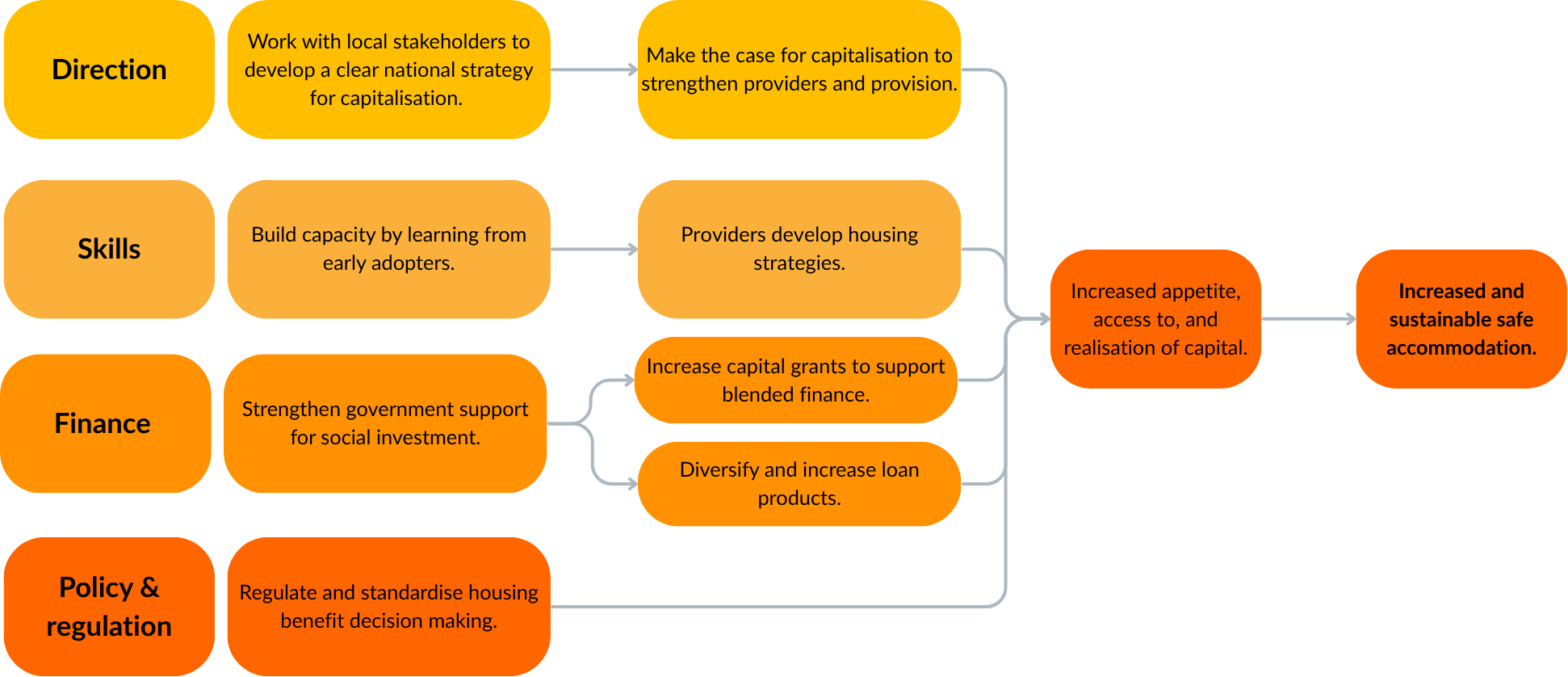
Figure 1: framework for a national strategy for capitalisation (Firm Foundations: capitalising the women’s sector for a more sustainable approach to domestic abuse service delivery)
The evidence: women’s organisations’ experience of property and capital
Fiona Sheil, October 2026.
Accompanying Firm Foundations is the first survey data on capitalisation in the women’s sector, from a survey of 69 women’s organisations. Between them respondents hold the equivalent of more than a third of England’s refuge bedspaces.
Key findings:
Very few own their property. At most half of accommodation providers own any of their accommodation, and only one owns all of it.
Lack of control affects quality and sufficiency. Among those that lease, three in five have faced repair delays and more than half couldn’t make adaptations women needed. Nearly one in three have had to reduce or refuse placements.
Appetite far outstrips access. Nearly nine in ten have considered buying property, but fewer than half have received capital funding.
Public capital barely reaches the sector. Only 4 of the 28 organisations that raised capital got it from local authorities, government programmes or housing associations.
Commissioning stands in the way of long-term investment. More than four in five say funding and commissioning systems discourage it. That includes most of those that own property: they bought despite the system, not because of it.
Get involved
Through late 2026 and into 2027, RIVA will bring policymakers, funders and providers together to share learning from early adopters and build commitment to a national strategy. To be part of that conversation, contact RIVA.
How to cite
Hilder, Lisa and Fiona Sheil (2026) Firm Foundations: capitalising the women’s sector for a more sustainable approach to domestic abuse service delivery. Middlesbrough: RIVA.
Sheil, Fiona (2026) Firm Foundations? Women’s organisations’ experience of property and capital. Middlesbrough: RIVA.